
Air Leaks That Actually Get Sealed
Spray Foam Insulation in Port St. Lucie and surrounding areas for properties losing conditioned air through gaps conventional insulation cannot fill
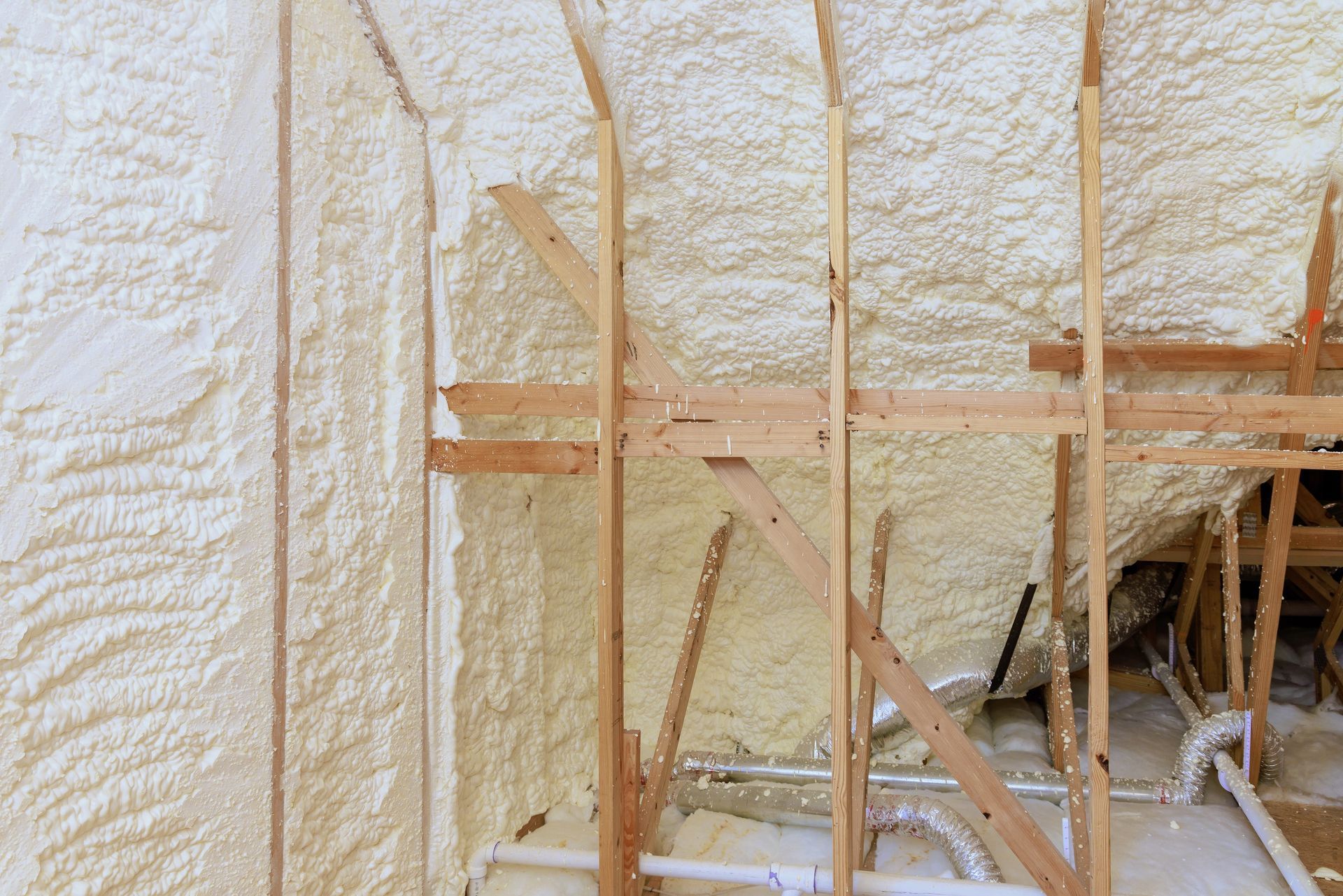
Spray foam insulation expands immediately after application to fill irregular cavities, seal around penetrations, and create an airtight barrier in spaces where fiberglass batts or blown materials leave gaps that allow air movement between conditioned and unconditioned areas. This expanding characteristic makes spray foam particularly effective in attics with complex roof lines, crawlspaces with floor joist pockets, wall cavities around windows and electrical boxes, and garage ceilings where traditional insulation compresses or leaves voids. Treasure Coast Thermal Solutions applies spray foam in both residential and commercial properties throughout Port St. Lucie, Palm City, Wellington, and neighboring communities where the material's superior thermal performance and moisture resistance address the specific challenges South Florida's heat and humidity create for building envelopes that must maintain consistent indoor conditions against extreme outdoor temperatures.
The application process involves spraying two chemical components that mix and expand within seconds to many times their liquid volume, adhering to framing members, sheathing, and other surfaces while filling every gap in the cavity being treated. Open-cell foam expands more and provides excellent air sealing with moderate R-value per inch, while closed-cell foam expands less but delivers higher R-value, moisture resistance, and structural rigidity that can strengthen wall and roof assemblies.
Schedule a spray foam insulation estimate to determine which foam type and application areas would address your property's specific thermal performance issues.
Why Spray Foam Works for Humid Climates
Spray foam installation requires preparing the application area by covering surfaces that shouldn't receive foam, ensuring proper ventilation during curing, and applying the material in controlled passes that build up to the target thickness without overheating as the chemical reaction releases thermal energy. The installer monitors expansion rates and adjusts application speed to achieve complete cavity filling without excessive material waste, trimming any foam that expands beyond framing faces once the material fully cures.
After the foam cures completely—typically within 24 hours depending on temperature and humidity—you'll notice immediate improvements in how consistently your HVAC system maintains set temperatures throughout the building, with rooms that previously felt warmer or more humid now matching the comfort level of other spaces. The air sealing properties mean you'll feel fewer drafts or temperature variations near exterior walls, and the moisture resistance helps prevent the condensation issues that can occur in Florida when humid outdoor air contacts cooled surfaces inside wall or ceiling cavities.
Spray foam's durability means the insulation maintains its R-value and air sealing performance indefinitely without the settling that reduces blown insulation effectiveness or the compression that degrades fiberglass batts over time. The material also adds structural rigidity to roof decks and wall assemblies, which provides secondary benefits beyond thermal performance, though the primary advantage remains the elimination of air infiltration that forces HVAC systems to constantly re-condition outdoor air that enters through envelope gaps.
Common Questions About This Service
Homeowners and commercial property managers often need specific information about how spray foam differs from other insulation options and what the installation process involves.
What makes spray foam more effective than traditional insulation materials?
The expanding nature allows spray foam to seal completely around irregular surfaces, electrical penetrations, and framing irregularities that leave gaps when using batts or blown insulation, eliminating the air movement that accounts for more heat transfer than conduction through insulation materials alone.
How does spray foam address moisture concerns in South Florida buildings?
Closed-cell spray foam acts as a vapor barrier that prevents humid outdoor air from penetrating wall and ceiling cavities where it could condense on cooled surfaces, reducing the moisture accumulation that leads to mold growth or material degradation in the building envelope.
Which areas of a building benefit most from spray foam application?
Attic roof decks see significant performance gains because spray foam seals the numerous penetrations and irregular spaces where roof framing meets sheathing, while crawlspaces benefit from the moisture control spray foam provides in below-grade environments exposed to ground moisture and humid air.
When can the space be occupied after spray foam installation?
Open-cell foam typically allows re-entry within a few hours once the material stops off-gassing, while closed-cell foam may require 24 hours before occupants return, though specific timing depends on ventilation conditions and the total square footage sprayed during the application.
What factors affect spray foam insulation costs?What factors affect spray foam insulation costs?
Material expenses vary significantly between open-cell and closed-cell formulations, application thickness determines total material volume required, and access difficulty in confined spaces like crawlspaces or between floor joists increases labor time compared to open attic applications.
Treasure Coast Thermal Solutions evaluates which spray foam type and application strategy will deliver the best performance for your specific building conditions and energy efficiency goals. Contact our team to arrange a property assessment and receive detailed recommendations for your insulation project.