Operating Costs That Stop Climbing Unnecessarily
Commercial Insulation Services in Port St. Lucie and surrounding areas for businesses experiencing high energy expenses and occupant comfort complaints
Commercial buildings lose significant thermal efficiency when insulation fails to control heat transfer through roofs, walls, and floor assemblies, forcing HVAC systems to work continuously just to maintain acceptable indoor conditions. Treasure Coast Thermal Solutions installs commercial insulation in offices, retail spaces, warehouses, and mixed-use facilities where temperature regulation directly affects both operational expenses and the comfort of employees, customers, or tenants who occupy these spaces daily. The insulation strategy for commercial properties differs from residential work because building codes specify higher performance standards, larger square footage requires material selection that balances cost with effectiveness, and installation often must occur within compressed schedules that minimize disruption to business operations.
Commercial insulation work addresses new construction projects where insulation gets installed as the building envelope closes in, as well as existing facilities where inadequate or deteriorated insulation contributes to poor energy performance and comfort issues. The evaluation process identifies areas where the building loses conditioned air or gains unwanted heat, then determines which insulation type—spray foam for superior air sealing, batt insulation for cost-effective wall cavity filling, or rigid board for exterior applications—best fits each section of the structure.
Request a commercial insulation consultation to review your facility's current thermal performance and identify improvement opportunities in Port St. Lucie, Green Acres, Okeechobee, or a neighboring community.
What Proper Insulation Requires in Commercial Settings
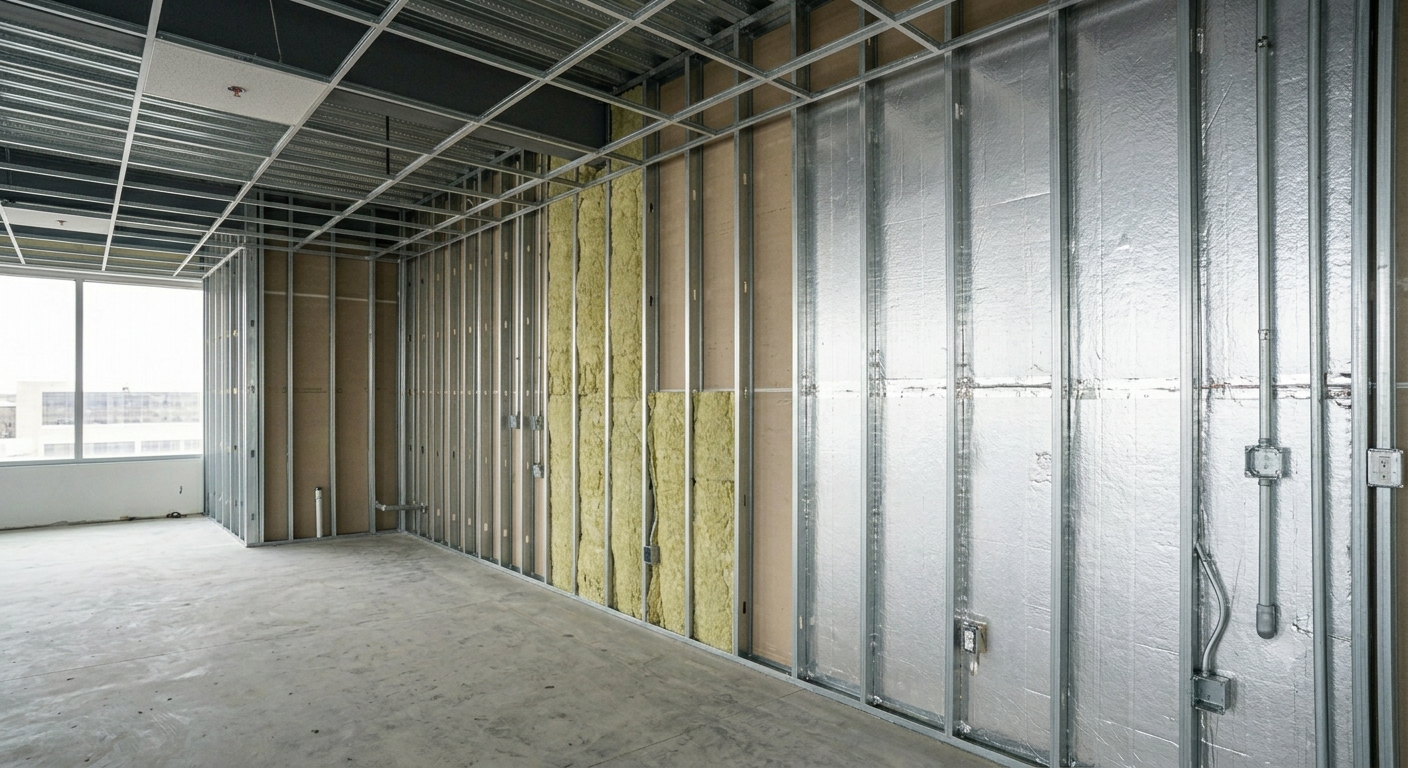
Installing commercial insulation involves coordinating with other trades to ensure materials get placed before mechanical systems, electrical conduit, and interior finishes cover access to wall cavities, ceiling plenums, and other envelope areas where insulation must be installed. The specification often calls for specific R-values in different building sections based on the structure's use, with warehouse spaces typically requiring less insulation than climate-controlled office areas, while retail environments need consistent performance to maintain customer comfort throughout the sales floor.
Once the insulation is in place and the building envelope seals properly, your facility maintains more stable temperatures with less HVAC runtime, which translates to lower monthly utility bills and equipment that doesn't cycle as frequently or experience the same wear from continuous operation. Occupants will notice fewer hot spots near exterior walls or below roof decks, more consistent temperatures between different zones of the building, and improved comfort that reduces complaints about spaces feeling too warm or air conditioning that can't keep up during peak afternoon heat.
Commercial insulation projects also address compliance with applicable building codes and energy standards that specify minimum thermal performance for different occupancy types and climate zones. The installation documentation includes R-value verification and material specifications that satisfy inspection requirements and provide records for LEED certification or other green building programs your project may be pursuing.
Answers to Frequent Service Questions
Business owners and property managers typically need clarity on how insulation improvements affect building performance and project timelines.
What insulation solutions work best for warehouse versus office spaces?
Warehouses with minimal climate control often use cost-effective batt or blown insulation in roof decks to reduce solar heat gain, while office spaces benefit from spray foam applications that provide both insulation and air sealing to maintain consistent comfort in occupied areas where temperature precision matters more.
How does commercial insulation reduce operating expenses?
Better insulation lowers the thermal load your HVAC system must handle by slowing heat transfer through the building envelope, which reduces compressor runtime, fan operation hours, and total electricity consumption that directly impacts your monthly utility costs.
When should insulation installation occur during construction or renovation?
New construction requires insulation after the building envelope is weather-tight but before interior finishes cover wall cavities, while renovation projects need scheduling that allows access to targeted areas without disrupting ongoing business operations more than necessary.
What factors determine which insulation type gets specified?
The decision depends on the building section being insulated, required R-values per code, moisture considerations in areas like below-grade walls or roof assemblies, budget constraints across large commercial square footage, and whether air sealing is a priority beyond basic thermal resistance.
How long does commercial insulation installation take for an entire facility?
Project duration varies widely based on building size and complexity, but a typical 10,000-square-foot office space might require three to five days for complete insulation installation, while larger warehouses or facilities with complicated geometry and multiple building systems may extend to several weeks of coordinated work.
Treasure Coast Thermal Solutions coordinates commercial insulation projects around your operational needs and works within the construction schedule to complete installation efficiently. Arrange an on-site evaluation to discuss your facility's specific requirements and receive a project timeline tailored to your building.